Posts

Risk of unintended or high –risk pregnancy

Why .to refer for family planning services. Who .all women and men of reproductive age should ideally be screened,as the opportunity arises, within maternal and child health programmes and health services for adults. In areas where such an approach would be culturally acceptable ,consider opportunistic screening of all adults of reproductive age receiving medical care for other reasons . How . screen by enquiry in a confidential setting . jcan be done by primary care workers with training in how to maintain confidentiality . the home based maternal record ,which contains a section for information on intervals between pregnancies, as well as covering several  pregnancies, constitutes an excellent means of reminding health workers to enquire about the need for family planning. When .as the opportunity arises within maternal and  child health programmes and general medical care. Resource levels required. Low for detection; intervention may require resource levels that ar...

Dental or periodontal disease

Image
Why and how . dental or periodontal disease is a significant cause of suffering and disability in adults in developing countries. Preventive efforts(hygiene fluoridation )need to be targeted to whole population from childhood on. Early detection in adults has, as its primary goals, pain control and preservation of function.unpublihed reports indicate that it is possible to train primary care workers to recognize dental or periodontal disease which can be treated at the local or district level with limited resources (MHleclercq, personal communication, 1989;a yashin, personal communication, 1987). In areas where there is a high prevalence of oral cancer, it appears rational to integrate dental and periodontal screening with oral cancer screening . Resource levels required . low for screening; medium for definitive diagnoses and treatment. Recommendation on use of screening. Recommended to screen all adults; frequency of screening needs to be determined by local resources. Prima...

Screening in the health care of adults

Image
General comments Routine mass screening of pregnant women and newborn infants, and of infants and children on the basis of the immunization schedule, has an important place in strategies for disease prevention and health promotion. Early detection of risks to mothers and children, with effective intervention, con be ecpected to make a substantial contribution to the overall improvement of a population s health in the long run. Routine mass screening of adults, however ,has a more limited place in a primary healthcare system, for several reasons. In the first place , pregnant women and young children are those most liable to suffer severe adverse effects in the absence of early detection and care for many relatively common conditions . furthermore, there are highly effective ways of dealing with many of the most prevalent health problems of mothers and children at relatively low cost, for example , the identification and treatment of asymptomatic urinary tract infection or anaem...

Onchocerciasis and trachoma

Image
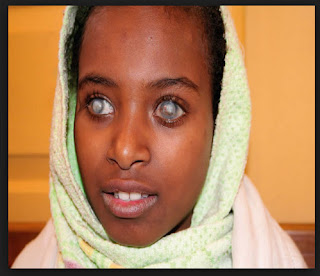
Screening of asymptomatic persons is not recommended . early detection of signs and symptoms is recommended .in 1976 , a WHO report on oncho-cerciasis recommended vector control rater than screening for this prevalent cause of blindness (WHO ,1976).a study in sierra leone has described a successful trial of school-based screening for onchocerciases by an ophthalmologist; however this would not be feasible in most developing countries (stilma et al 1983).primary prevention and early detection of persons with symptoms are also the strategies recommended in a publication on the prevention of blindness issued by WHO in 1984 (WHO ,1984).where services are accessible, teaching the public to practice self-referral for symptoms (early detection )is a useful adjunct to primary prevention in endemic  areas. 

scrring Schistosomiasis

Image
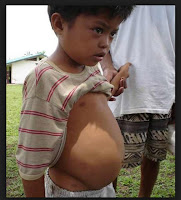
Screening of asymptomatic persons is not recommended. As with many endemic parasitic diseases, opportune treatment will not be effective in the long term, without primary prevention (environmental control)to prevent repeated re-exposure. Screening should be seen as an adjunct to environmental control and education of the public to minimize exposure and to promote self-referral for gross haematuria (early detection).in many cases, the population will not have the option of avoiding exposure, for economic reasons ; broad environmental control measures will almost always be required. Enquiry regarding history of haematuria has been used as an initial screen in adults, although gross inspection of urine is more accurate, especially in children ,followed by testing of urine for blood with reagent strips in the case of those found positive on initial screening (mott et al., 1985)

Leprosy, leishmaniasis, filariasis ,and other endemic diseases with skin manifestations.

Image
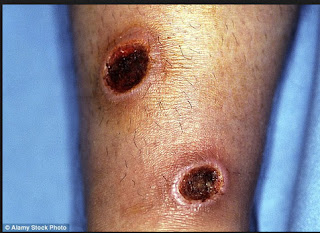
Screening of asymptomatic persons is generally not recommended. Follow –up of case contacts is recommended, as with any highly communicable disease. Mall screening is expensive . in endemic areas, it is more rational to use targeted case-finding by trained primary care workers who have regular contact with the population at risk, together with public education to promote self-referral for early detection of characteristic skin lesion (ganapati et al,. 1984)and the provision of accessible and acceptable general medical services for the population at risk. Skin manifestations are easily identifiable by primary care workers, and by an educated public in endemic regions . ganapati et al. (1984)cite two earlier studies from rural areas in india to support their point that mass screening may add very little to the case detection achieved by other methods such as mall public health education. In settings with access to fairly high-technology laboratory resources, it may be an option to scr...

Topsy HIV infection

Image
See discussion of HIV testing in prenatal health care. The same general issues apply in the non-pregnant population, except that the rationale for screening is more limited, since the issues of deciding whether to carry        a pregnancy to term or whether to breast-feed are not involved. The primary rationale for screening the asymptomatic  non-pregnant population at elevated risk is either to provide reassurance or to assist HIV infected individuals in planning their lives. even with a negative screening test result, however, reassurance can only be limited in view of the delay between infection and seroconversion. community-wide education and the promotion of safe sexual practices are likely to have a far greater impact on HIV infection than a large-scale screening effort. Thus, our recommendation on HIV screening is uncertain at this time. Emphases should be placed on primary prevention. If testing is done, resources need to be in place fo...